![[Freedom Trainers logo - with birds flying]](https://freedomtrainers.net/wp-content/uploads/2026/02/logo_black-text_red-birds.png)
They tried to indict them. The jury said no.
That’s the people’s pardon — and it’s one of the most powerful tools ordinary citizens have ever held. Juries used it to reject Fugitive Slave Laws. They used it to gut Prohibition enforcement.
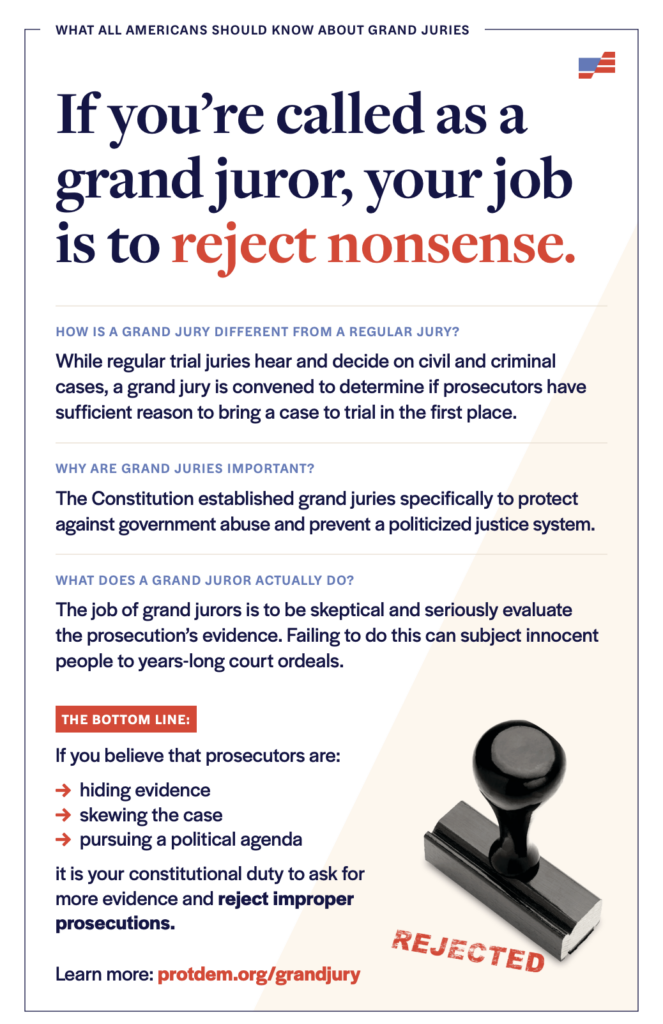
And it’s happening right now. Federal grand juries have refused to rubber-stamp trumped-up charges against protesters. They’ve refused to serve Trump’s revenge campaign against his critics. And when Trump’s DOJ pushed to indict six members of Congress who lawfully told soldiers to refuse illegal orders, a grand jury said absolutely not.
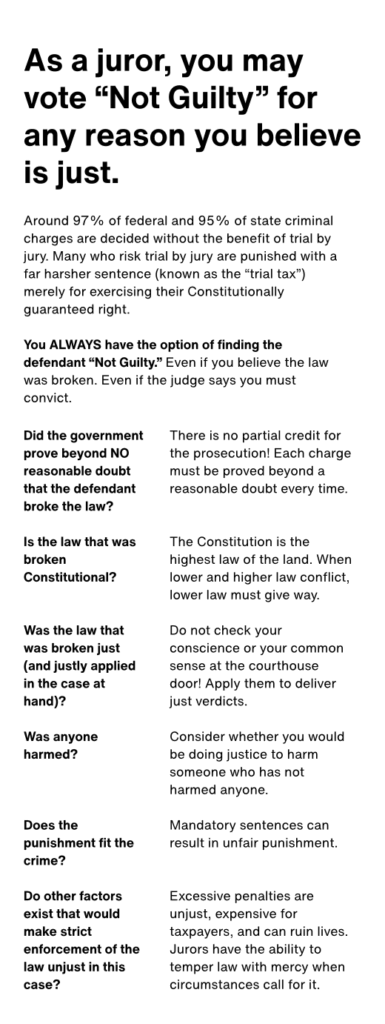
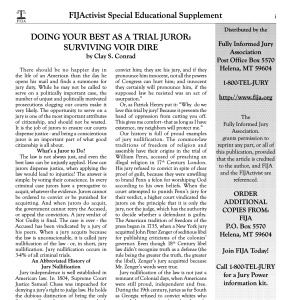
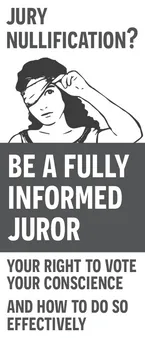
Here’s how it works: As a juror, you are asked to make a legal determination. You are required to consider only the information presented at trial — but can bring your conscience with you. Nullification is the historic prerogative of the jury to represent the conscience of the community when the law or its application is unjust.
Totally legal. It’s one way ordinary people push back against government abuse.
Learn about jurors’ power in authoritarianism, like how jury nullification works, why it matters, and what you can do with it — because the courtroom is one of the last places where the people still hold the cards. You just have to know your rights.
Core Training on The People’s Pardon
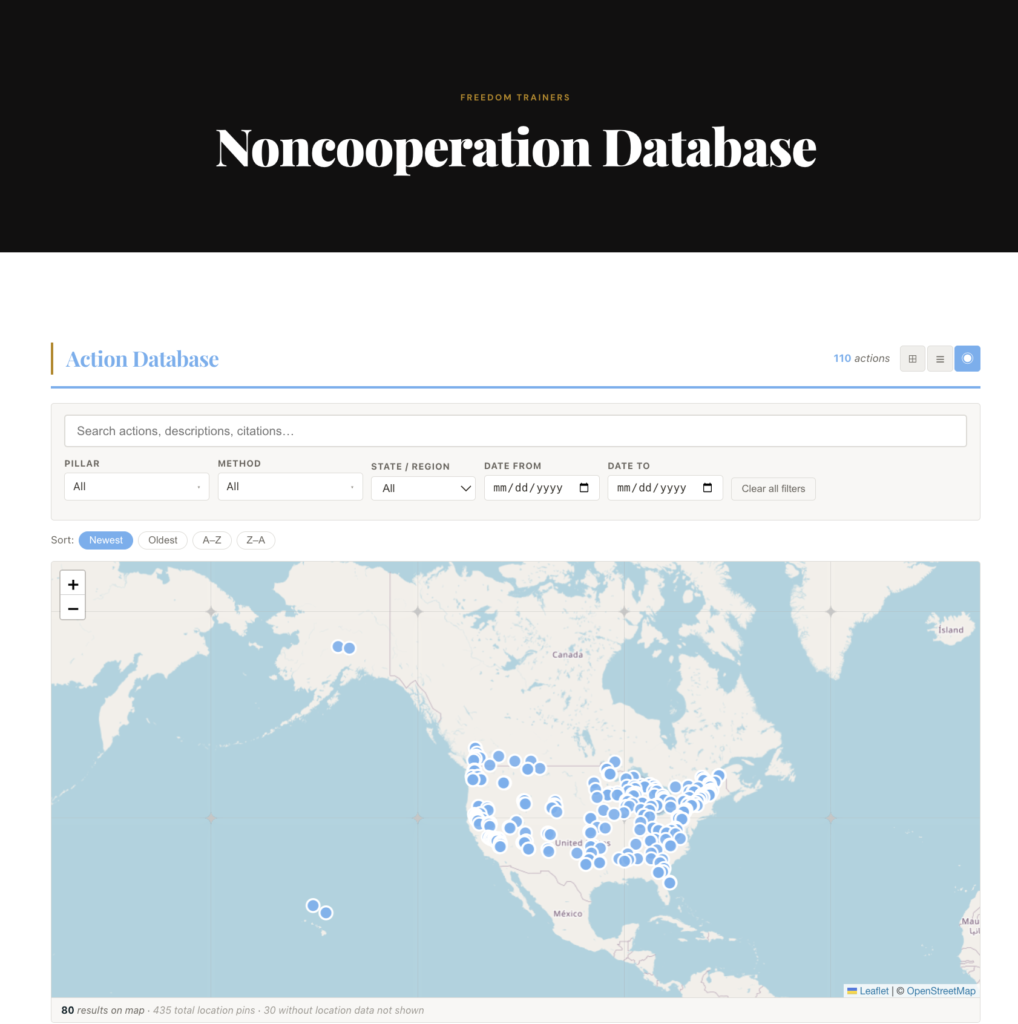
Noncooperation Database
The People’s Pardon Training on jurors’ power amidst authoritarianism
The People’s Pardon Training Slide Deck (60-minute training)
A very simple-to-use presentation you can copy and lead with your own group explaining the basics. To use for your own workshops, download your own copy.
Upcoming People’s Pardon Trainings
No upcoming trainings.
Handouts

For further learning:
- Fully Informed Jury Association (fija.org) provides many detailed answers to questions not covered in this briefing
- The Juror Project is an excellent source of information
- ACLU: It’s Perfectly Constitutional to Talk About Jury Nullification
- Watch this video on Jury Nullification
- Constitutional gatekeepers: The history and role of grand juries